- Your cart is empty
- Continue Shopping


€220Current price is: €220. Original price was: €250.
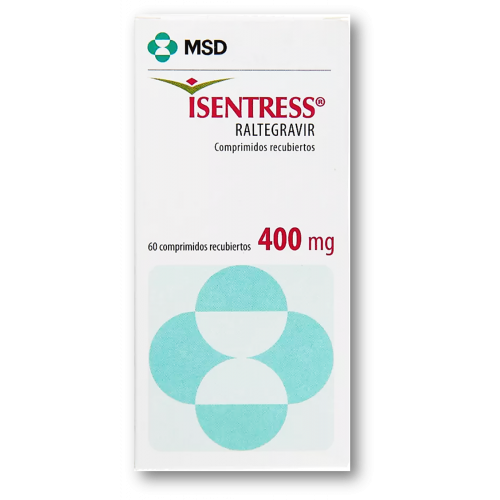
Isentress 400 mg (raltegravir potassium film-coated oral tablets) is a prescription-only, first-in-class integrase strand transfer inhibitor (INSTI) indicated for the treatment of Human Immunodeficiency Virus type 1 (HIV-1) infection in combination with other antiretroviral agents. By binding directly to the catalytic core of the HIV-1 integrase enzyme and chelating essential divalent magnesium cofactors, it arrests the covalent integration of viral cDNA into the host genome. Unlike protease inhibitors, raltegravir does not require pharmacokinetic boosting with ritonavir or cobicistat and is cleared primarily via UGT1A1-mediated glucuronidation. Dispensed strictly by medical prescription.
Isentress 400 mg delivers raltegravir potassium, the prototypical small-molecule integrase strand transfer inhibitor approved for clinical management of HIV-1 infection. By targeting the third essential enzymatic step of retroviral replication (strand transfer), raltegravir halts the replication cycle following reverse transcription but prior to host chromosome integration. The 400 mg tablet formulation is engineered for twice-daily administration and represents an established anchor agent across treatment-naive regimens, salvage protocols for treatment-experienced individuals, and post-exposure prophylaxis (PEP) guidelines.
Clinical Profile & Pharmaceutical Formulation
Active Pharmaceutical Ingredient: Raltegravir potassium (equivalent to 400 mg of free raltegravir base per tablet).
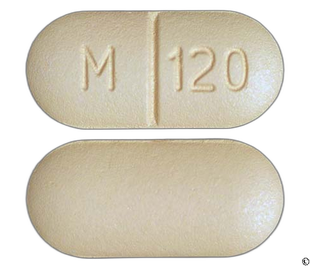
Dosage Form & Physical Appearance: Film-coated, oval-shaped, biconvex pink tablet debossed with the Merck identifier “227” on one side and plain on the reverse.
Formulation Differentiation: The standard 400 mg film-coated tablet is administered on a twice-daily ($\text{BID}$) schedule. It is not bioequivalent to, nor interchangeable on a milligram-for-milligram basis with, Isentress chewable tablets, oral suspension formulations, or Isentress HD 600 mg tablets (which are dosed as 1200 mg once daily).
Pharmacodynamics & Mechanism of Action
Targeting Retroviral Integrase: Following entry and reverse transcription, HIV-1 generates a linear double-stranded pre-integration cDNA complex. Raltegravir selectively targets the catalytic core domain (CCD) of the pre-assembled viral integrase complex.
Chelation of Catalytic Divalent Metal Ions: The oxygen-rich chelating triad of raltegravir binds tightly to two divalent magnesium cations ($\text{Mg}^{2+}$) coordinated by the conserved DDE catalytic motif (Asp64, Asp116, Glu152) within the active site of integrase.
Blockade of Strand Transfer: By occupying the metal-binding pocket, raltegravir prevents integrase from binding to host chromosomal DNA, arresting the essential “strand transfer” step (covalent ligation of the $3’$-processed viral DNA ends into the 5′-phosphate ends of the host cellular chromosome).
Fate of Unintegrated Viral DNA: Failure to integrate blocks transcription of viral messenger RNA and structural polyproteins. Unintegrated viral linear DNA is subsequently degraded or circularized by host repair enzymes into non-productive, transcriptionally silent 2-LTR (long terminal repeat) circles, aborting productive viral propagation.
Pharmacokinetics & Biotransformation
Absorption & Food Effect: Rapidly absorbed after oral administration, reaching peak plasma concentrations ($C_{\max}$) in approximately 3 hours under fasted conditions. Exhibits substantial pharmacokinetic variability, but systemic exposure is not clinically impaired by dietary fat or meal timing; it may be taken with or without food.
Distribution & Protein Binding: Approximately 83% bound to human plasma proteins across therapeutic concentrations. Readily crosses the blood-brain barrier, achieving cerebrospinal fluid (CSF) concentrations approximately 5% to 6% of concurrent plasma concentrations.
Non-CYP Hepatic Clearance (UGT1A1 Glucuronidation): Unlike many other antiretroviral anchor classes, raltegravir does not rely on the cytochrome P450 enzyme system for clearance. Its primary metabolic pathway is glucuronidation catalyzed almost exclusively by UDP-glucuronosyltransferase 1A1 ($\text{UGT1A1}$) to form a pharmacologically inactive $\text{raltegravir glucuronide}$. Because it does not inhibit or induce CYP isoenzymes, it displays minimal CYP-mediated drug-drug interactions and requires no pharmacokinetic enhancer (e.g., ritonavir).
Elimination: Displays a biphasic terminal elimination half-life of approximately 9 hours. Approximately 51% of the administered dose is excreted in feces (predominantly parent compound derived from biliary secretion and unabsorbed drug) and 32% is excreted in urine (principally as raltegravir glucuronide, with ~9% as unchanged drug).
Indications & Clinical Prescribing Protocols
Clinical Indications: Indicated in combination with other antiretroviral agents for the treatment of HIV-1 infection in treatment-naive or treatment-experienced adults and pediatric patients weighing at least 25 kg. Also a preferred component of occupational and non-occupational post-exposure prophylaxis (PEP) regimens.
Standard Adult Dosing: One 400 mg tablet taken orally twice daily ($\text{BID}$, approximately every 12 hours) with or without food.
Dose Modification with Strong UGT1A1 Inducers:
Rifampin Co-administration: Rifampin strongly induces UGT1A1, markedly accelerating raltegravir clearance. In patients requiring concurrent rifampin therapy (e.g., active tuberculosis), the dose of raltegravir must be doubled to 800 mg twice daily (two 400 mg tablets BID) for the duration of co-treatment.
Safety Considerations, Warnings, & Drug Interactions
Severe Cutaneous Adverse Reactions (SCAR): Post-marketing reports have documented severe, potentially life-threatening skin reactions, including Stevens-Johnson syndrome (SJS), toxic epidermal necrolysis (TEN), and drug reaction with eosinophilia and systemic symptoms (DRESS). Therapy must be discontinued immediately if severe rash develops, particularly if accompanied by constitutional symptoms (fever, malaise, facial edema, blistering, or mucosal lesions).
Skeletal Muscle Toxicity & Rhabdomyolysis: Clinically significant creatine kinase (CK) elevations, myopathy, and rhabdomyolysis have occurred during raltegravir therapy. Baseline CK monitoring is prudent, and patients should be advised to report unexplained muscle pain, tenderness, or weakness. Exercise caution when co-prescribing other agents known to cause myopathy (such as statins).
Polyvalent Metal Cation Chelation Interactions: Raltegravir binds readily to polyvalent metal cations ($\text{Al}^{3+}, \text{Mg}^{2+}, \text{Ca}^{2+}, \text{Fe}^{2+}$), forming insoluble chelates that drastically impair oral absorption:
Aluminum/Magnesium Antacids: Co-administration is contraindicated, as it severely reduces raltegravir systemic bioavailability even when doses are separated.
Calcium Carbonate Antacids: May be co-administered provided they are taken with food, or separated by several hours.
Immune Reconstitution Inflammatory Syndrome (IRIS): During the initial phase of combination ART, patients with low baseline $\text{CD4}^+$ counts may develop an inflammatory response to indolent or residual opportunistic infections (e.g., Mycobacterium tuberculosis, cytomegalovirus, Pneumocystis jirovecii pneumonia).

 English English
  German
 Italian
 Dutch
Dutch
 Spanish


Reviews
There are no reviews yet.