- Uw winkelwagen is leeg
- Verder Winkelen


€200
Abacavir sulfate (oral tablets or oral solution) is a prescription-only carbocyclic nucleoside reverse transcriptase inhibitor (NRTI) indicated for the treatment of Human Immunodeficiency Virus type 1 (HIV-1) infection in combination with other antiretroviral agents. By undergoing intracellular biotransformation into its active triphosphate metabolite (carbovir triphosphate), it competitively inhibits HIV-1 reverse transcriptase and forces premature viral DNA chain termination. Administration mandates prior genetic screening for the $\text{HLA-B*5701}$ allele to avoid life-threatening, multi-organ hypersensitivity reactions. Dispensed strictly by medical prescription.
Abacavir sulfate (Ziagen®) is a synthetic carbocyclic analogue of the endogenous nucleoside deoxyguanosine. As a foundational component of dual- and triple-agent antiretroviral therapy (ART)—often co-formulated in fixed-dose combinations such as abacavir/lamivudine or abacavir/dolutegravir/lamivudine—abacavir suppresses viral replication, elevates $\text{CD4}^+$ T-cell counts, and mitigates the progression of HIV-associated clinical immunodeficiency.
Clinical Profile & Pharmaceutical Formulations
Active Pharmaceutical Ingredient: Abacavir sulfate (chemical name: $(1S,4R)\text{-4-[2-amino-6-(cyclopropylamino)-9}H\text{-purin-9-yl]cyclopent-2-en-1-yl}\text{methanol sulfate}$).
Dosage Forms & Strengths:
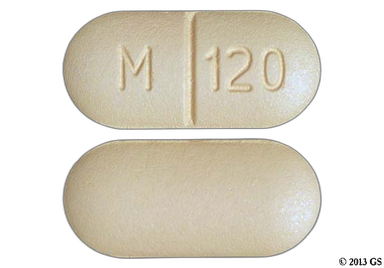
Film-Coated Tablets: 300 mg abacavir (equivalent to 351 mg abacavir sulfate), typically scored, biconvex, and debossed with manufacturer identifiers.
Oral Solution: 20 mg/mL strawberry-banana flavored aqueous solution for pediatric or liquid-dependent regimens.
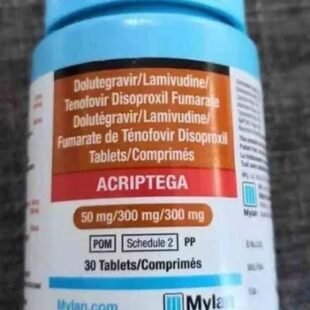
Fixed-Dose Combinations: Frequently formulated with lamivudine (600 mg/300 mg) or lamivudine and dolutegravir (600 mg/300 mg/50 mg).
Pharmacodynamics & Mechanism of Action
Intracellular Phosphorylation: Abacavir is a prodrug that requires a unique three-step intracellular metabolic cascade catalyzed by cellular enzymes:
Phosphorylation by adenosine phosphotransferase to abacavir monophosphate.
Deamination by cytosolic enzymes to carbovir monophosphate ($\text{CBV-MP}$).
Sequential phosphorylation by cellular kinases to the active moiety: carbovir 5′-triphosphate ($\text{CBV-TP}$).
Reverse Transcriptase Inhibition & Chain Termination: $\text{CBV-TP}$ structurally mimics natural deoxyguanosine triphosphate ($\text{dGTP}$) and acts as a competitive substrate inhibitor against the HIV-1 reverse transcriptase enzyme.
Chain Termination: Once incorporated into nascent viral cDNA strands, the lack of a 3′-hydroxyl ($3’\text{-OH}$) group prevents the formation of standard $3’\text{-to-}5’$ phosphodiester bonds required to attach subsequent nucleotides, resulting in irreversible premature viral DNA chain termination.
Cellular DNA Polymerase Selectivity: Exhibits low inhibitory affinity for host human nuclear DNA polymerases $\alpha$, $\beta$, En $\gamma$, resulting in significantly lower mitochondrial toxicity compared to earlier-generation didactic NRTIs (such as zidovudine or didanosine).
Pharmacokinetics & Biotransformation
Absorption & Bioavailability: Rapidly and extensively absorbed following oral administration, demonstrating an absolute bioavailability of approximately 83% to 86%. Food does not significantly alter systemic exposure (AUC).
Distribution: Lipophilic properties facilitate penetration across the blood-brain barrier, achieving cerebrospinal fluid (CSF) concentrations approximately 18% to 36% of concurrent plasma concentrations. Low plasma protein binding (~50%).
Non-CYP Hepatic Clearance: Extensively metabolized hepatically without significant involvement of the cytochrome P450 enzyme system, avoiding typical CYP-mediated drug-drug interactions. Clearance occurs via two primary pathways:
Alcohol dehydrogenase ($\text{ADH}$), converting abacavir to the 5′-carboxylic acid derivative (~30%).
UDP-glucuronosyltransferase ($\text{UGT}$), forming the 5′-glucuronide conjugate (~36%).
Elimination & Kinetics: Displays a short terminal plasma elimination half-life of 1.5 to 2.0 hours. However, the intracellular active metabolite ($\text{CBV-TP}$) exhibits an extended half-life exceeding 20 hours, supporting once-daily clinical dosing schedules. Renal excretion of unchanged abacavir accounts for less than 2% of the dose.
Critical Pharmacogenomic Warning: HLA-B*5701 & Hypersensitivity
Mandatory Pre-Treatment Screening: Clinical guidelines mandate that all patients undergo pharmacogenomic screening for the human leukocyte antigen allele $\text{HLA-B*5701}$ prior to initiating abacavir.
Abacavir Hypersensitivity Reaction (AHR): Carriage of the $\text{HLA-B*5701}$ allele is directly linked to an immune-mediated multi-organ hypersensitivity reaction. Abacavir binds non-covalently within the antigen-binding cleft of the $\text{HLA-B*5701}$ molecule, altering its peptide presentation specificity and triggering widespread activation of self-reactive $\text{CD8}^+$ T-cells.
Clinical Presentation: Symptoms typically manifest within the first six weeks of therapy and involve at least two of the following organ systems:
Systemic: High fever, extreme fatigue, malaise.
Cutaneous: Maculopapular, generalized, or confluent rash.
Gastrointestinal: Severe nausea, vomiting, diarrhea, abdominal pain.
Respiratory: Dyspnea, cough, pharyngitis.
Absolute Rechallenge Contraindication: If an AHR is suspected or diagnosed, abacavir must be permanently discontinued immediately. Rechallenging a patient following an AHR can cause rapid hemodynamic collapse, severe multi-organ failure, and death within hours.
Important Safety Information & Boxed Warnings
Fatal Hypersensitivity Reactions: Outlined in a dedicated Boxed Warning. Patients who test positive for $\text{HLA-B*5701}$ must not be prescribed abacavir-containing regimens.
Lactic Acidosis & Severe Hepatomegaly with Steatosis: Class warning applicable to nucleoside analogues, typically secondary to rare mitochondrial toxicity. Manifests with elevated serum lactate, tachypnea, nausea, and acute hepatic failure.
Ethanol Interaction: Co-administration with ethanol competitively inhibits alcohol dehydrogenase ($\text{ADH}$), reducing abacavir clearance and increasing abacavir AUC by approximately 41%.
Cardiovascular Considerations: Large observational cohort studies (such as the D:A:D study) have reported an association between current/recent abacavir use and an elevated risk of myocardial infarction. Caution is warranted in patients with substantial underlying cardiovascular risk factors

 English English
  German
 Italian
 Dutch
Dutch
 Spanish


Beoordelingen
Er zijn nog geen beoordelingen.