- Il tuo carrello è vuoto
- Continua Lo Shopping


Fascia di prezzo: €300 €2,000
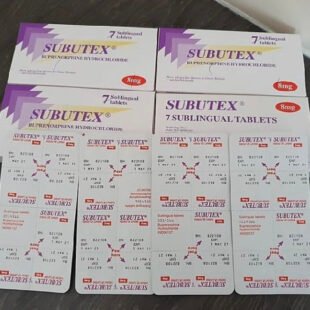
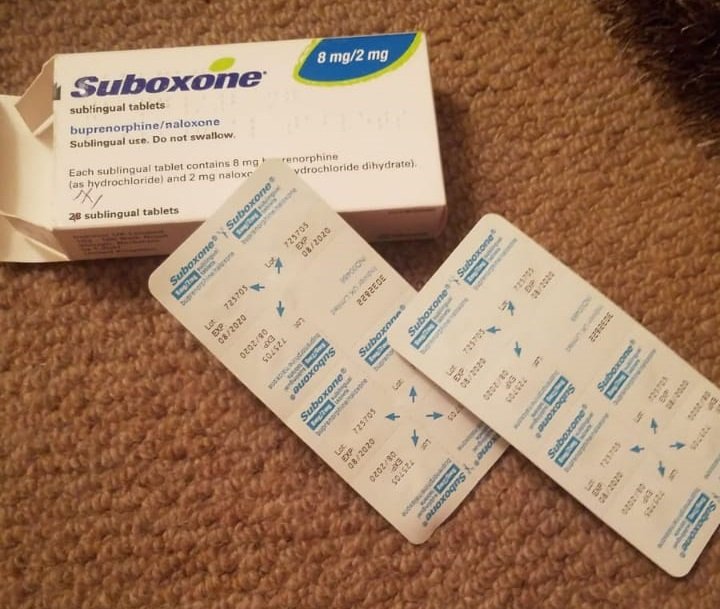
Developed by Reckitt Benckiser Pharmaceuticals (now Indivior) and approved as an improvement over single-entity buprenorphine (Subutex), Suboxone is the primary pharmaceutical standard of care for the outpatient stabilization and chronic maintenance of opioid dependence. By pairing a high-affinity partial $\mu$-opioid agonist with an intravenous antagonist deterrent, the co-formulation reduces illicit diversion and intravenous abuse while preserving once-daily sublingual efficacy.
Pharmaceutical Profile & Physical Architecture
Active Pharmaceutical Ingredients:
Buprenorphine Hydrochloride: Formulated at 2 mg, 4 mg, 8 mg, or 12 mg (freebase equivalent).
Naloxone Hydrochloride Dihydrate: Formulated at 0.5 mg, 1 mg, 2 mg, or 3 mg (freebase equivalent), maintaining a strict 4:1 stoichiometric ratio.
Dosage Forms & Physical Presentations:
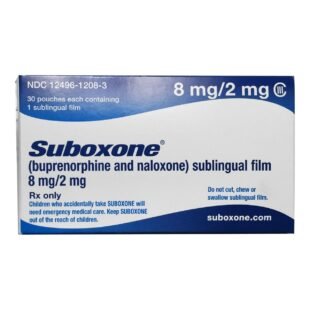
Sublingual / Buccal Film Strips: Orange, rectangular polymeric dissolvable films stamped with white alphanumeric identifiers (e.g., “N2”, “N4”, “N8”, “N12” corresponding to buprenorphine strength). Engineered using water-soluble hydrophilic polymers (hypromellose, polyethylene oxide) designed to adhere to moist oral mucosa and dissolve within 3 to 7 minutes.
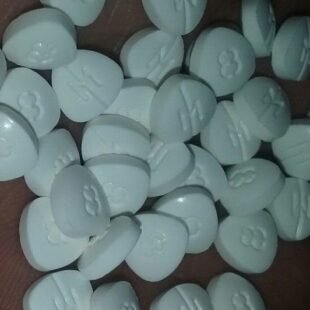
Sublingual Compressed Tablets: Round or hexagonal orange-to-peach tablets debossed with manufacturer-specific insignias (e.g., an alphanumeric sword logo and “N” or numerical markings).
Organoleptic Masking: Formulated with citric acid, anhydrous sodium citrate, acesulfame potassium, and natural lime-orange flavoring agents to mask the bitter taste of buprenorphine and naloxone salts.
Pharmacodynamics & The 4:1 Dual-Molecule Abuse-Deterrent Mechanism
Buprenorphine Component ($\mu$-OR Partial Agonist & $\kappa$-OR Antagonist):
High Receptor Affinity & Slow Off-Rate: Exhibits sub-nanomolar affinity for the human $\mu$-opioid receptor ($K_i \approx 0.2\text{–}0.7\text{ nM}$) with an exceptionally prolonged dissociation half-life ($>1\text{ hour}$). It displaces full $\mu$-agonists (such as heroin, methadone, oxycodone, and fentanyl) from receptor sites and creates a pharmacological blockade against secondary agonist binding.
Ceiling Effect: As a partial agonist, maximal intrinsic receptor activation plateaus at therapeutic doses, providing an established ceiling on euphoria and life-threatening respiratory depression when taken as prescribed.
$\kappa$-Opioid Antagonism: Competitively blocks central dynorphin-mediated $\kappa$-opioid receptors, alleviating the dysphoria, anxiety, and depressive states associated with chronic post-acute opioid withdrawal.
Naloxone Component (The Route-Selective Antagonist Deterrent):
Sublingual Non-Absorption: When administered sublingually according to clinical directions, naloxone undergoes extensive pre-systemic metabolism and displays poor mucosal permeability ($<2\%\text{ to }3\%$ oral/sublingual bioavailability). Circulating plasma levels remain sub-therapeutic, allowing buprenorphine to engage $\mu$-opioid receptors without interference.
Parenteral Precipitation Cascade: If a tablet or film is crushed, liquefied, and injected intravenously or subcutaneously, the naloxone achieves 100% systemic bioavailability. Because naloxone is an unhindered pure antagonist with rapid distribution, it immediately displaces residual opioids from central receptors, triggering violent, acute precipitated withdrawal in opioid-dependent individuals.
Pharmacokinetics & Dual-Molecule Biotransformation
Absorption & Kinetics:
Buprenorphine: Achieves absolute sublingual bioavailability between 30% and 55% (swallowing film residues results in $<10\%$ bioavailability due to first-pass clearance). Peak plasma concentrations ($C_{\max}$) are reached within 45 to 100 minutes.
Naloxone: Sublingual $C_{\max}$ is minimal; systemic clearance is so rapid that circulating free levels are negligible in normal dosing.
Hepatic Biotransformation:
Buprenorphine: Cleared primarily via hepatic cytochrome P450 3A4 ($\text{CYP3A4}$) $N$-dealkylation into norbuprenorphine (an active, polar metabolite with full intrinsic $\mu$-OR efficacy but low blood-brain barrier permeability), followed by extensive phase II UDP-glucuronosyltransferase conjugation ($\text{UGT1A1}$, $\text{UGT2B7}$).
Naloxone: Extensively metabolized via direct phase II glucuronidation, catalyzed predominantly by $\text{UGT1A8}$ e $\text{UGT2B7}$ into inactive naloxone-3-glucuronide ($\text{N3G}$).
Elimination:
Buprenorphine: Mean terminal elimination half-life ranges from 24 to 42 hours, driven by plasma protein binding (~96%), tissue accumulation, and slow receptor off-rates. Excretion is primarily fecal/biliary (~70%), with renal clearance accounting for roughly 30%.
Naloxone: Elimination half-life is substantially shorter, averaging 1.0 to 1.5 hours, cleared almost entirely by the kidneys as inactive glucuronide conjugates.
Clinical Indications & Administration Guidelines
Therapeutic Indications: Indicated for the maintenance treatment of opioid dependence. Although also approved for induction, clinical best practice frequently utilizes single-entity buprenorphine (Subutex) for initial unmonitored transition to avoid early adverse reactions, switching to Suboxone for long-term chronic maintenance.
Induction Nuance (Buprenorphine-Induced Precipitated Withdrawal): Clinicians and patients must recognize that buprenorphine itself precipitates withdrawal if taken while full $\mu$-agonists occupy receptors. Initiation requires verified moderate withdrawal (Clinical Opiate Withdrawal Scale [COWS] $>12$), typically 12 to 24 hours after short-acting opioids and 48 to 72+ hours after long-acting opioids like methadone.
Maintenance Dosing: Standard therapeutic maintenance doses range from 8 mg/2 mg to 16 mg/4 mg daily as a single oral dose, titrated to suppress cravings and objective withdrawal without exceeding a ceiling of 24 mg/6 mg daily.
Sublingual/Buccal Administration Protocol: Patients must wet the mouth with water, place the film under the tongue or against the inside of the cheek, and allow complete dissolution without chewing, swallowing, or talking. Eating or drinking is prohibited until the matrix is fully dissolved.
Safety Considerations, Boxed Warnings, & Monitoring
Lethal Respiratory Depression with Benzodiazepines: Carries a Boxed Warning regarding profound sedation, fatal respiratory arrest, and coma when co-administered with benzodiazepines, other sedative-hypnotics, or alcohol. While buprenorphine features a respiratory ceiling when taken alone, combined GABAergic agonism bypasses this safety barrier.
Dental Erosion & Severe Oral Adverse Events: In 2022, regulatory health agencies (including the US FDA) issued safety communications detailing severe dental problems associated with sublingual buprenorphine/naloxone products, including dental caries, tooth decay, oral infections, and loss of teeth resulting from the acidic nature of the dissolved sublingual matrix. Patients are advised to gently rinse with water after complete dissolution and delay tooth brushing for at least one hour.
Hepatotoxicity: Cases of severe cytolytic hepatitis, hepatic necrosis, and hepatic transaminase elevations have occurred. Baseline liver function tests (AST, ALT, bilirubin) and periodic post-initiation monitoring are required, particularly in patients with viral hepatitis (HBV/HCV co-infections).
Accidental Pediatric Exposure: Ingestion of even a fractional film strip by an opioid-naive infant or child can cause fatal respiratory depression. Safe storage in child-resistant packaging is mandatory.
Analytical Screening & Forensic Identification
Presumptive Colorimetric Screening:
Marquis Reagent: Produces a slow, muted, pale pink-to-violet reaction; significantly slower and less intense than classic phenanthrene opioids (morphine/codeine), which flash deep purple-black immediately.
Mecke Reagent: Yields a slow, dull brown-green transition.
Instrumental Confirmation & Compliance Toxicology:
Liquid Chromatography-Tandem Mass Spectrometry (LC-MS/MS): Standard analytical method for clinical compliance and forensic post-mortem investigation. Allows simultaneous baseline separation and quantification of parent buprenorphine, norbuprenorphine, naloxone, and naloxone-3-glucuronide using multiple reaction monitoring (MRM):
Buprenorphine: $m/z$ $468.3 \rightarrow 396.2$ e $m/z$ $468.3 \rightarrow 414.2$.
Norbuprenorphine: $m/z$ $414.2 \rightarrow 340.2$ e $m/z$ $414.2 \rightarrow 101.1$.
Naloxone: $m/z$ $328.2 \rightarrow 212.1$ e $m/z$ $328.2 \rightarrow 253.1$.
Specimen Validity & Direct Tablet “Spiking”: In urine drug monitoring (UDM) for addiction clinic compliance, laboratories measure the metabolite-to-parent ratio ($\text{norbuprenorphine} / \text{buprenorphine}$). Detection of high parent buprenorphine with undetectable or trace norbuprenorphine indicates the patient directly dipped or dissolved medication into the urine cup to fabricate compliance rather than ingesting it.
Regulatory Classification & Institutional Governance
Controlled Substance Classification: Suboxone is placed into Schedule III of the United States Controlled Substances Act (moderate-to-low physical dependence relative to Schedule II full agonists, with high accepted medical utility). In the United Kingdom, it is classified as a Class C controlled drug (Schedule 3 CD).
Federal Regulatory Reform (MAT Act): Prescribing restrictions were expanded under the federal Consolidated Appropriations Act of 2023, eliminating the historic DATA 2000 “X-waiver” requirement in the United States and permitting any clinician with standard Schedule III prescriptive authority to prescribe buprenorphine/naloxone for OUD.
Storage & Facility Security: Reference standards, raw API powders, and pharmaceutical formulations require secure, locked-cabinet or vault storage with strict inventory tracking and disposal protocols.
| Pillole | 100, 200, 300, 400, 500, 1000, 2000 |
|---|
 English English
  German
 Italian
 Dutch
Dutch
 Spanish

Recensioni
Ancora non ci sono recensioni.