- Il tuo carrello è vuoto
- Continua Lo Shopping


€140Prezzo corrente: €140. Prezzo originale era: €200.
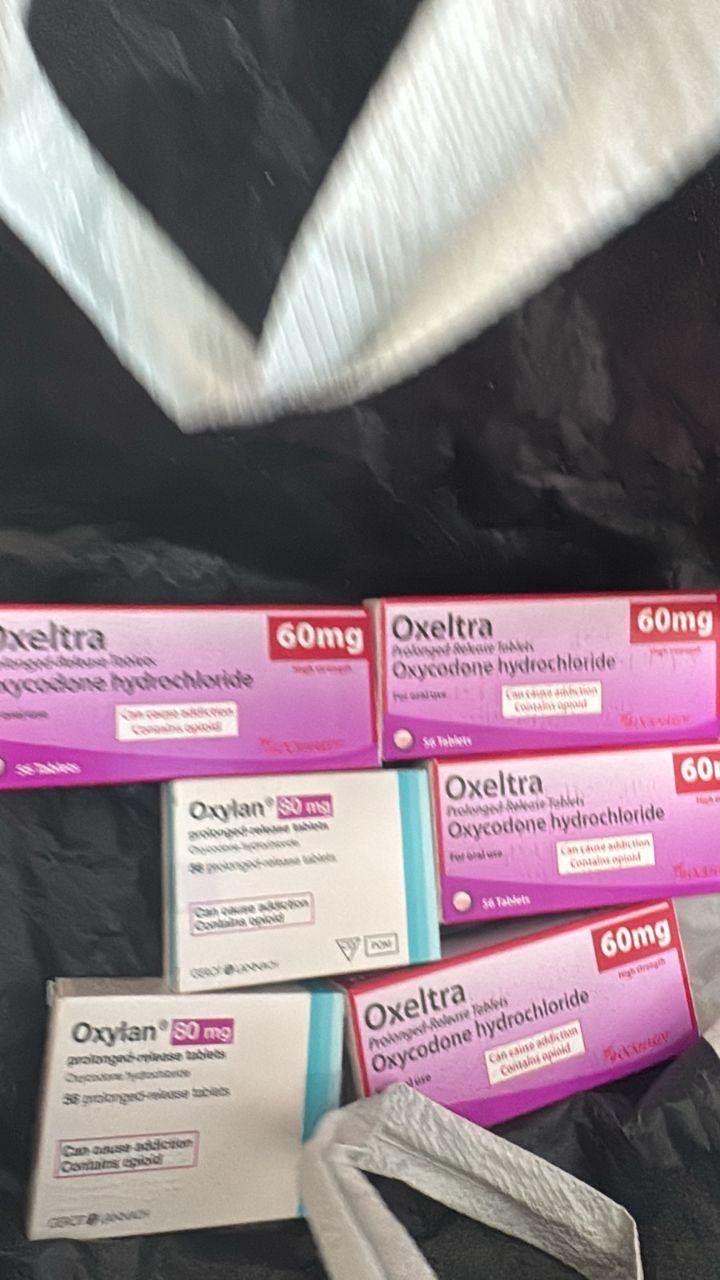
Oxeltra (oxycodone hydrochloride prolonged-release) is a potent, prescription-only opioid analgesic indicated for the continuous management of moderate to severe pain requiring round-the-clock intervention when non-opioid treatments are inadequate. Engineered as a 12-hour biphasic prolonged-release tablet bioequivalent to standard prolonged-release oxycodone formulations, it selectively activates central $\mu$-opioid receptors to attenuate ascending nociceptive signaling under strict medical supervision. Available in multiple strengths ranging from 5 mg to 80 mg. Valid prescription required.
Oxeltra prolonged-release oral tablets deliver oxycodone hydrochloride, a semi-synthetic $\mu$-opioid receptor agonist, via an advanced controlled-release matrix. Formulated for 12-hourly administration, Oxeltra provides stable therapeutic analgesia for chronic severe pain conditions—such as oncological pain and severe refractory postoperative discomfort—minimizing peak-and-trough plasma fluctuations associated with immediate-release opioids.
Clinical Profile & Physical Presentation
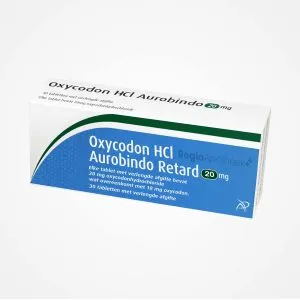
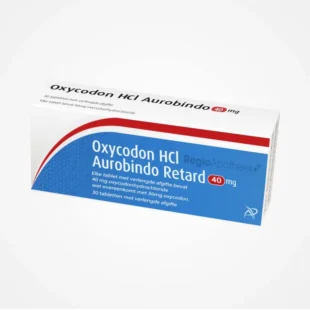
Active Ingredient: Oxycodone Hydrochloride (available in 5 mg, 10 mg, 15 mg, 20 mg, 30 mg, 40 mg, 60 mg, and 80 mg strengths).
Physical Identification: Round, biconvex, film-coated tablets debossed with “OX” followed by the corresponding milligram strength (e.g., “OX 10”, “OX 20”, “OX 80”).
Release Profile: Engineered with a biphasic release mechanism that delivers an initial rapid-release component to facilitate onset of analgesia, followed by sustained, continuous dissolution across a 12-hour dosing interval.
Pharmacodynamics & Mechanism of Action
Receptor Affinity: Acts as a full agonist at central and spinal $\mu$-opioid receptors, with secondary affinity for $\kappa$-opioid receptors.
Intracellular Signal Transduction: Receptor binding stimulates inhibitory G-proteins ($G_i/G_o$), inhibiting adenylyl cyclase, reducing intracellular cyclic adenosine monophosphate (cAMP) accumulation, closing voltage-dependent N-type calcium channels, and opening inwardly rectifying potassium channels.
Nociceptive Inhibition: Hyperpolarizes primary afferent nerve terminals, suppressing the presynaptic exocytosis of pain neurotransmitters (including substance P and glutamate) and altering sensory-affective pain perception in the cerebral cortex and periaqueductal gray.
Pharmacokinetics & Metabolism
Absorption: Demonstrates high oral bioavailability (approximately 60% to 87%) relative to morphine; peak plasma concentrations ($C_{\max}$) are reached within 4 to 5 hours following ingestion of the prolonged-release tablet.
Metabolism: Primarily metabolized hepatically via cytochrome P450 enzymes—predominantly CYP3A4 to noroxycodone, with CYP2D6 catalyzing conversion to active oxymorphone.
Clearance: Mean plasma elimination half-life is approximately 4.5 to 5 hours, with parent compound and polar conjugated metabolites cleared primarily via the kidneys.
Prescribing Guidelines & Administration Protocol
Strict Whole-Tablet Ingestion: Tablets must be swallowed whole with water and never crushed, broken, chewed, or dissolved. Disrupting the tablet matrix compromises the prolonged-release mechanism, leading to rapid systemic dose-dumping of a potentially lethal quantity of oxycodone.
High-Dose Restriction (60 mg & 80 mg): Higher strengths are contraindicated in opioid-naive patients and are reserved strictly for individuals who have demonstrated sustained opioid tolerance.
Discontinuation Protocol: When discontinuing therapy, doses must be gradually tapered under physician direction to avoid acute autonomic withdrawal manifestations.
Important Safety Information & Boxed Warnings
Addiction, Abuse, and Misuse: Oxeltra is a controlled opioid analgesic carrying substantial risks of substance misuse, psychological and physiological dependence, and diversion.
Life-Threatening Respiratory Depression: Severe or fatal respiratory depression can occur at any stage of therapy, with greatest susceptibility occurring during treatment initiation or following dosage escalation.
Risks with CNS Depressants: Co-administration with benzodiazepines, barbiturates, other sedatives, or alcohol can cause severe sedation, respiratory collapse, coma, and mortality.
Accidental Exposure: Ingestion of even a single dose, especially by children, can cause fatal respiratory arrest. Secure storage in a tamper-resistant lockbox is required.
 English English
  German
 Italian
 Dutch
Dutch
 Spanish


Karin E. (Sweden) –
Takes about 30 minutes to feel drowsy. Accurate dropper bottle, shipped within 48 hours
Karin E. (Sweden) –
Takes about 30 minutes to feel drowsy. Accurate dropper bottle, shipped within 48 hours