- Tu carrito está vacío
- Continuar comprando





Rango de precios: €600 por €9,000
5-MeO-DMT (5-methoxy-$N,N$-dimethyltryptamine), also known as $O$-methyl-bufotenin, is a naturally occurring and synthetically produced tryptamine alkaloid. Found in high concentrations within the parotoid gland secretions of the Colorado River toad (Incilius alvarius, formerly Bufo alvarius) as well as various plant genera (Virola, Anadenanthera), 5-MeO-DMT represents an important benchmark in neuropharmacological and forensic research due to its distinct receptor selectivity profile relative to classic psychedelic tryptamines.
Chemical & Physical Profile
Active Analyte: 5-methoxy-$N,N$-dimethyltryptamine (available as freebase or hydrochloride/fumarate salt).
Molecular Formula & Mass: $\text{C}_{13}\text{H}_{18}\text{N}_2\text{O}$ | 218.30 g/mol (freebase)
Chemical Architecture: Consists of an indole core bearing a methoxy group ($-\text{OCH}_3$) at the 5-position and an ethylamine side chain terminated with two methyl groups at the terminal amine.
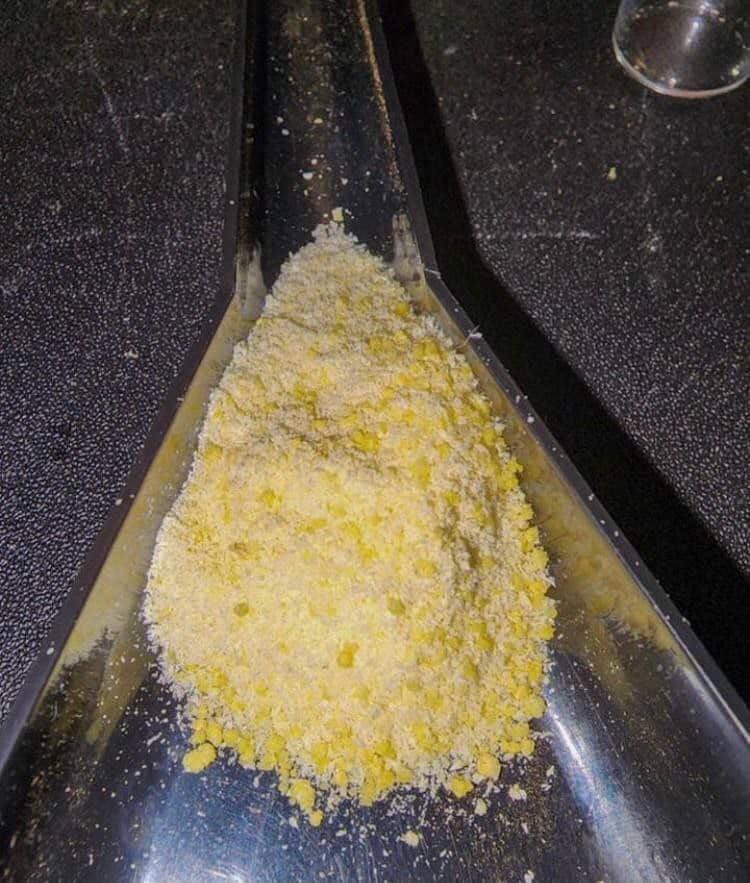
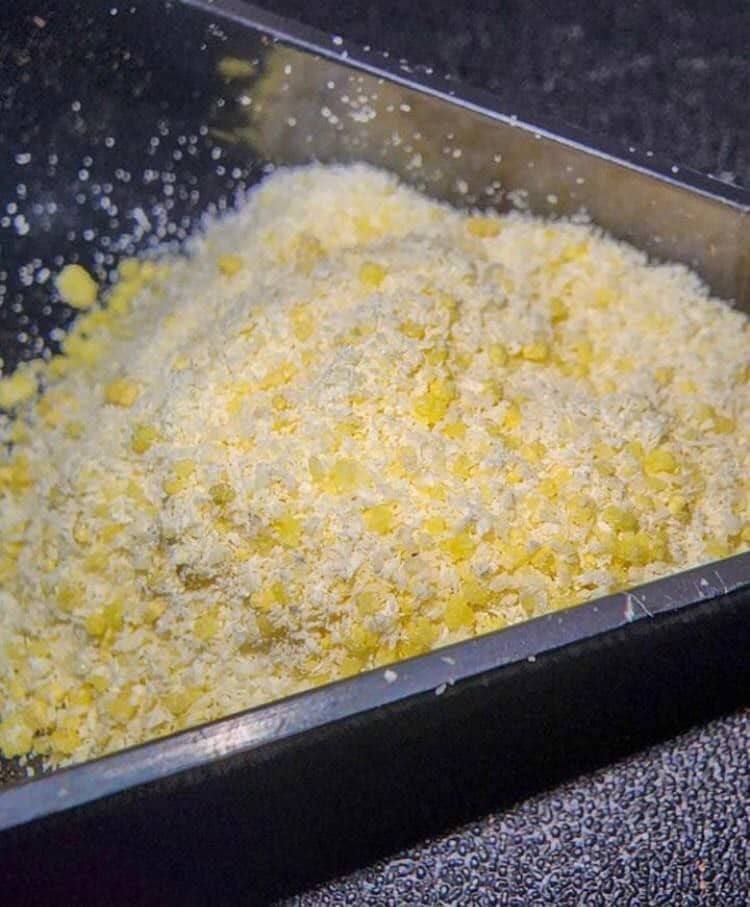
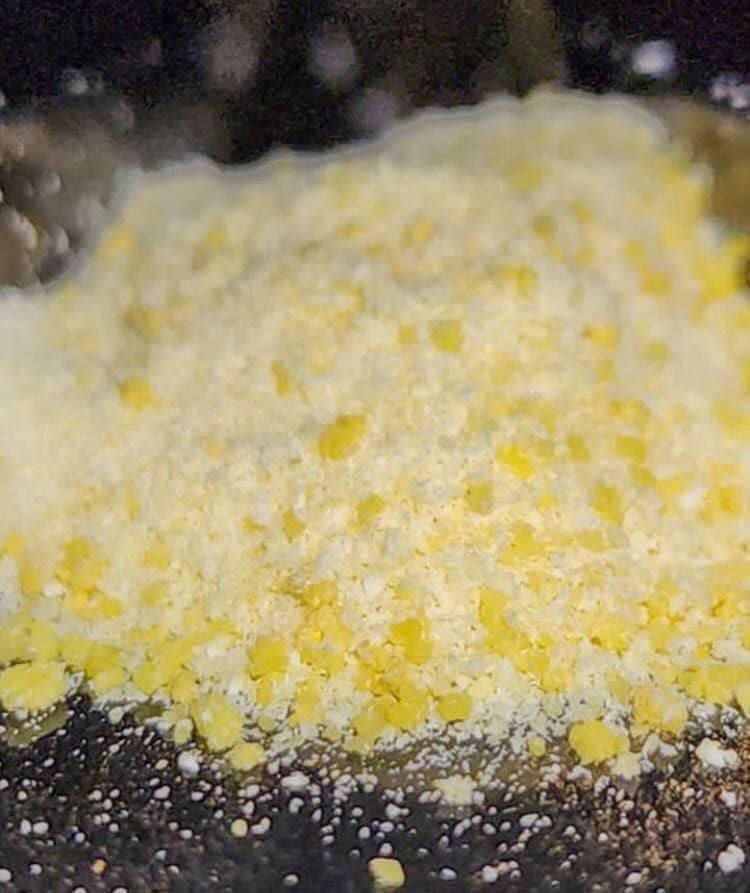
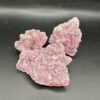
Physical Presentation: Off-white to pale tan crystalline powder (synthetic) or complex amorphous waxy solid (crude toad secretion matrix containing lipid fractions, cholesterol, and related indole metabolites).
Pharmacodynamics & Receptor Mechanisms
$5\text{-HT}_{1\text{A}}$ Receptor Agonism: Unlike classic psychedelics (such as DMT or psilocin) which exert their primary effects via $5\text{-HT}_{2\text{A}}$ activation, 5-MeO-DMT displays exceptionally high binding affinity ($K_i \approx 2\text{–}5\text{ nM}$) and high intrinsic efficacy as a full agonist at the serotonin $5\text{-HT}_{1\text{A}}$ receptor subtype.
Intracellular Signaling: Receptor activation stimulates pertussis toxin-sensitive inhibitory G-proteins ($G_i/G_o$), suppressing adenylyl cyclase activity, inhibiting cyclic AMP formation, and opening G-protein-coupled inwardly rectifying potassium channels ($\text{GIRK}$). This hyperpolarizes target projection neurons across the raphe nuclei, hippocampus, and cortical networks.
Secondary Targets: Exhibits lower affinity for $5\text{-HT}_{2\text{A}}$, $5\text{-HT}_{2\text{C}}$, y $5\text{-HT}_7$ receptors, trace amine-associated receptor 1 ($\text{TAAR}_1$), and vesicular monoamine transporters.
Pharmacokinetics & Biotransformation
Monoamine Oxidase Clearance: Rapidly metabolized hepatically and systemically via oxidative deamination catalyzed by monoamine oxidase A ($\text{MAO-A}$) to form 5-methoxyindole-3-acetic acid (5-MIAA), leading to a very short biological half-life (approximately 12 to 20 minutes in mammalian models).
CYP2D6 Demethylation: Undergoes secondary biotransformation via cytochrome P450 2D6 ($O$-demethylation) to produce active bufotenin (5-hydroxy-$N,N$-dimethyltryptamine), an active metabolite with high $5\text{-HT}_{2\text{A}}$ affinity.
Analytical Profiling & Forensic Screening
Presumptive Colorimetric Spot-Tests:
Ehrlich’s Reagent: Rapid development of an intense purple/violet reaction, confirming the presence of an unsubstituted indole nitrogen.
Marquis Reagent: Typically yields an unreactive or sluggish pale yellow-to-olive transition.
Mecke Reagent: Shifts slowly from clear to a dull greenish-brown.
Instrumental Identification:
GC-MS: Demonstrates a diagnostic base peak at $m/z$ 58 ($[\text{CH}_2=\text{N}(\text{CH}_3)_2]^+$), a molecular ion $[M]^+$ at $m/z$ 218, and secondary diagnostic fragments at $m/z$ 174 and $m/z$ 159.
LC-MS/MS: Validates precursor-to-product ion transitions ($m/z$ $219 \rightarrow 174$, $219 \rightarrow 58$) for trace quantification in biological fluids and seized materials.
Toxicological Profile & Critical Safety Hazards
Autonomic & Respiratory Toxicity: Inadvertent in vivo systemic exposure produces potent sympathomimetic and autonomic disruption, including acute arterial hypertension, profound tachycardia, transient respiratory depression or apnea, and core hyperthermia.
Aspiration Risk: Rapid induction of motor ataxia, tremors, unconsciousness, and emesis creates a severe risk of fatal pulmonary aspiration in unmonitored environments.
Lethal Interaction with MAOIs: Concomitant exposure with Monoamine Oxidase Inhibitors (MAOIs, such as harmine, harmaline, or moclobemide) arrests the metabolic breakdown of 5-MeO-DMT, routinely precipitating fatal serotonin toxicity (malignant hyperpyrexia, autonomic collapse, metabolic acidosis, and seizures).
Regulatory Classification & Handling Controls
Controlled Substance Classification: 5-MeO-DMT is classified as a Schedule I controlled substance under the United States Controlled Substances Act, a Class A controlled drug in the United Kingdom, and is strictly regulated under international psychotropic control statutes.
Compliance Requirements: Possession, acquisition, analysis, and disposal mandate active DEA Schedule I analytical researcher registration, secure double-lock vault storage, and continuous chain-of-custody documentation.
| Grams | 10, 20, 40, 50, 70, 80, 90, 100, 200, 400, 500, 1000 |
|---|
 English English
  German
 Italian
 Dutch
Dutch
 Spanish

Reseñas
Todavía no hay reseñas.