- Tu carrito está vacío
- Continuar comprando


Rango de precios: €300 por €5,000
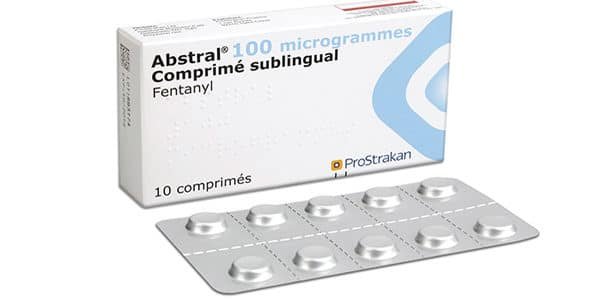
Abstral sublingual tablets deliver fentanyl citrate—a potent, highly lipophilic synthetic phenylpiperidine opioid agonist—via a specialized rapidly disintegrating sublingual matrix. Breakthrough cancer pain is characterized by severe, transient flare-ups of pain that peak rapidly (often within minutes) against a background of controlled chronic pain. Standard oral opioids exhibit delayed systemic onset due to gastrointestinal absorption and hepatic clearance; Abstral is engineered to circumvent extensive first-pass metabolism through direct vascular uptake across the oral sublingual mucosa.
Clinical Formulations & Physical Presentation
Active Ingredient: Fentanyl citrate (formulated in precise microgram increments: 100 mcg, 200 mcg, 300 mcg, 400 mcg, 600 mcg, and 800 mcg base equivalents).
Physical Identification: Small, round or custom-shaped white tablets designed to disintegrate on contact with saliva, debossed with unique numerical or geometric identifiers corresponding to the specific microgram strength (e.g., debossed with “1” for 100 mcg, “2” for 200 mcg, etc.).
Sublingual Matrix Formulation: Utilizes a fast-dissolving carrier matrix that disperses rapidly upon placement on the floor of the mouth beneath the tongue, releasing active fentanyl microcrystals for local mucosal uptake without requiring water.
Pharmacodynamics & Mechanism of Action
Selective Receptor Agonism: Operates as a selective, high-potency full agonist at $\mu$-opioid receptors ($\text{MOR}$) distributed throughout the spinal cord, periaqueductal gray, thalamus, and cortex.
Intracellular Signaling: Binds to G-protein-coupled $\mu$-receptors, triggering the dissociation of heterotrimeric $G_i/G_o$ subunits. This cascade inhibits adenylyl cyclase, reduces intracellular cyclic adenosine monophosphate (cAMP), closes voltage-gated N-type calcium channels, and stimulates inwardly rectifying potassium channels.
Rapid Central Uptake: Because fentanyl possesses high octanol:water partition lipophilicity (approximately 800 times more lipophilic than morphine), it rapidly crosses the blood-brain barrier following systemic absorption, yielding swift onset of central analgesia and sedation.
Pharmacokinetics & Bioavailability
Transmucosal Absorption: Approximately 50% to 54% of the total administered dose is absorbed directly across the sublingual mucosa into the systemic circulation, escaping hepatic first-pass elimination. The remaining fraction is swallowed with saliva and absorbed slowly through the gastrointestinal tract, where it undergoes extensive first-pass degradation.
Onset & Peak Concentration ($T_{\max}$): Detectable systemic plasma levels are observed within 10 to 15 minutes post-administration, with peak plasma concentrations ($C_{\max}$) achieved between 30 and 60 minutes.
Hepatic Biotransformation: Systemic fentanyl is cleared primarily by hepatic cytochrome P450 3A4 (CYP3A4) via $N$-dealkylation to the inactive metabolite norfentanyl.
Elimination Half-Life: Features a multi-phasic elimination profile: a rapid distribution half-life ($\alpha$-phase) of several minutes, followed by a terminal elimination half-life ($\beta$-phase) of approximately 5 to 15 hours due to slow redistribution from deep lipid stores.
Strict Opioid-Tolerance Criteria
Absolute Contraindication in Opioid-Naive Individuals: Abstral is strictly contraindicated in the management of acute or postoperative pain (e.g., headache, dental pain, surgical recovery) and must never be prescribed to opioid-naive patients due to the certainty of life-threatening respiratory arrest.
Definition of Opioid Tolerance: Patients must be established as clinically opioid-tolerant prior to initiating Abstral. Opioid tolerance is defined as receiving continuously for one week or longer at least:
60 mg oral morphine daily, or
25 mcg/hour transdermal fentanyl, or
30 mg oral oxycodone daily, or
8 mg oral hydromorphone daily, or
25 mg oral oxymorphone daily, or
An equianalgesic daily dose of another opioid.
Administration Protocols & Precautions
Administration Instructions: The tablet must be placed under the tongue at the deepest part of the sublingual cavity and allowed to dissolve completely. It must not be chewed, sucked, swallowed, or crushed. Patients should refrain from eating or drinking until the tablet has completely dissolved.
Titration & Conversion: Dosing must begin at the lowest titration unit (100 mcg) and be adjusted upward by a physician until an effective dose is identified. Strengths of Abstral cannot be converted on a microgram-for-microgram basis from other transmucosal or transdermal fentanyl products, as bioavailabilities differ substantially.
Important Safety Information & Boxed Warnings
Fatal Respiratory Depression: Life-threatening hypoventilation, respiratory depression, and apnea can occur even at therapeutic doses.
TIRF REMS Requirement: In the United States, Abstral is available only through the Transmucosal Immediate-Release Fentanyl (TIRF) Risk Evaluation and Mitigation Strategy (REMS) Access Program. Outpatient dispensing requires documented certification of the prescriber, pharmacy, and patient.
Accidental Exposure: Ingestion of even partial tablets by children can lead to immediate, fatal overdose. Storage in child-resistant packaging inside a locked location is mandated.
CYP3A4 Interactions: Concomitant use with strong CYP3A4 inhibitors (e.g., ketoconazole, clarithromycin, ritonavir) can dramatically increase fentanyl plasma levels, elevating the risk of lethal respiratory arrest.
| Box | 10, 20, 30, 40, 50, 100, 200, 300, 400, 500 |
|---|
 English English
  German
 Italian
 Dutch
Dutch
 Spanish


Reseñas
Todavía no hay reseñas.