- Ihr Warenkorb ist leer
- Weiter Einkaufen


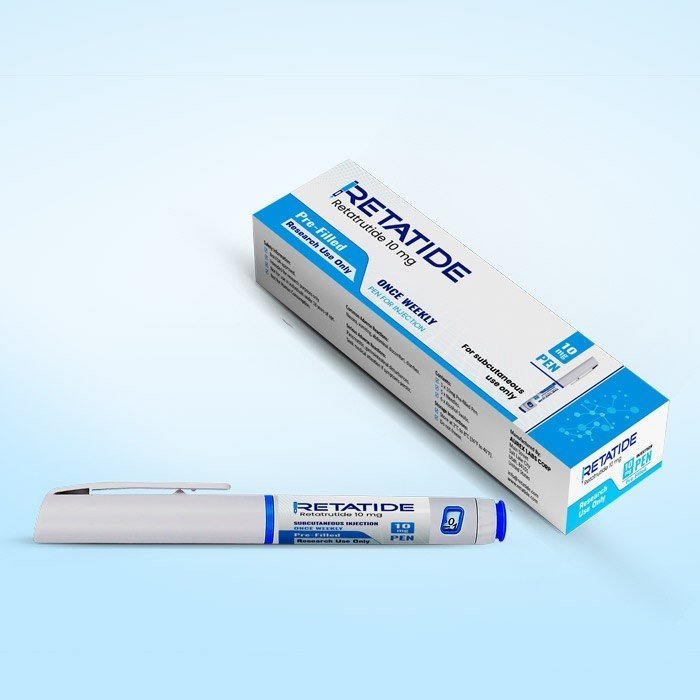
€90
It’s primarily studied for Adipositas und type 2 diabetes, showing superior weight loss compared to single- or dual-agonists like semaglutide (Ozempic/Wegovy) or tirzepatide (Mounjaro/Zepbound) in clinical trials.
Status: Not FDA-approved (as of October 2024). It’s in Phase 3 trials (e.g., TRIUMPH studies), with potential approval expected in 2026–2027.
| Phase/Trial | Anfangsdosis | Titration | Max Dosis | Weight Loss (at 48–72 weeks) |
|---|---|---|---|---|
| Phase 2 (Obesity) | 1 mg | Gradual increase every 4 weeks | 10 mg** or 12 mg | Up to 24.2% body weight loss (vs. 2.1% placebo) |
| Phase 2 (T2D) | 0.5 mg | Gradual | 10 mg | ~17% weight loss + A1C reduction |
| Risiko | Details | Hinweise |
|---|---|---|
| Sicherheit | No long-term human data; potential for severe GI issues, pancreatitis, or thyroid tumors (GLP-1 class risk). | FDA warnings on compounded semaglutide/tirzepatide analogs. |
| Rechtmäßigkeit | Illegal to buy/sell without prescription in most countries (e.g., US Schedule not yet set, but compounding restricted). | DEA/FDA crackdowns on GLP-1 knockoffs. |
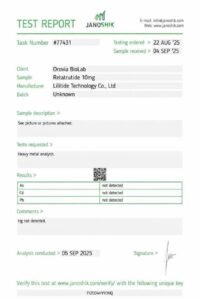
| Wirksamkeit | Variable potency; lab tests show some “retatrutide” as low as 50% pure. | Independent testing (e.g., Janoshik Analytics). |
Empfehlung: Do not self-administer. Consult a doctor for supervised trials or approved alternatives (e.g., tirzepatide). Off-label use lacks safety data—monitor via bloodwork if proceeding under medical guidance.
Retatrutide uniquely activates GLP-1, GIP, and glucagon receptors simultaneously, creating synergistic effects:
Key Advantage at 10 mg: Highest receptor occupancy leads to maximal glucagon-driven fat oxidation. Preclinical data (Nature Medicine, 2022) shows 30–50% greater energy expenditure vs. dual-agonists.
From pivotal Phase 2 trials (published NEJM June 2023; n=338 obese/non-diabetic adults):
| Dosis | % Body Weight Loss (48 weeks) | % with ≥15% Loss | HbA1c Change (T2D trial) | Key Metabolic Improvements |
|---|---|---|---|---|
| 10 mg | -17.5%** (obesity); -16.9% (T2D) | 76–81% | -1.8% | ↓ Liver fat 82%; ↓ Triglycerides 30%; ↓ BP 6–8 mmHg |
| 4 mg (comparative) | -12.9% | 64% | -1.4% | Moderate |
| Placebo | -1.6% | 27% | -0.3% | Minimal |
| Tirzepatide 15 mg** (benchmark) | ~20% (SURMOUNT-1) | 57% | -2.3% | Similar but less liver fat reduction |
Subgroup Benefits:
Weekly SC injection (abdomen/thigh/arm). Slow titration minimizes GI side effects:
| Woche | Dose (mg) |
|---|---|
| 1–4 | 2.5 |
| 5–8 | 5 |
| 9+ | 10** (maintenance) |
Mostly mild-moderate, peaking during titration (resolve in 80% by week 12).
| Adverse Event | Incidence (10 mg) | Severity/Management |
|---|---|---|
| Brechreiz | 58% | Mild; antiemetics (ondansetron) |
| Vomiting | 32% | Dose-hold if severe |
| Durchfall | 25% | Hydration, loperamide |
| Increased HR** (+10 bpm) | 20% | Monitor; resolves post-dose |
| Serious (rare <2%) | Gallbladder (1.5%), hypoglycemia (T2D) | Stop if pancreatitis suspected |
Kontraindikationen: Personal/family medullary thyroid cancer history, MEN2, severe GI disease.
| Issue | Prevalence | Risiko |
|---|---|---|
| <80% Purity | 40% of samples | Reduced efficacy/toxins |
| Bacterial Contamination | 15% | Infections |
| Incorrect Labeling (e.g., actually tirzepatide) | 10% | Unexpected effects |
| Arzneimittel | Max Dosis | Max Weight Loss | Cost (US, approved) | Approval Status |
|---|---|---|---|---|
| Retatrutide 10 mg | 10–12 mg | 24–30% (proj.) | TBD (~$1k/month?) | Phase 3 (2026?) |
| Tirzepatide | 15 mg | 22% | $1,000/month | Approved |
| Semaglutide | 2,4 mg | 15–20% | $1,300/month | Approved |
Projections: Lilly aims for obesity + T2D + NASH indications. Patent protection to 2036+.
Final Advice: Experimental—pursue via clinical trials (e.g., Lilly’s site) or wait for approval. Track via Lilly Pipeline or PubMed. Physician oversight essential for any use.
Sources: NEJM (2023), Lancet (2024 Phase 3 updates), FDA trial registry, independent lab reports. Updated Oct 2024.
 English English
  German
 Italian
 Dutch
Dutch
 Spanish


Chloé Moreau (Paris, France) –
Bien