- Ihr Warenkorb ist leer
- Weiter Einkaufen


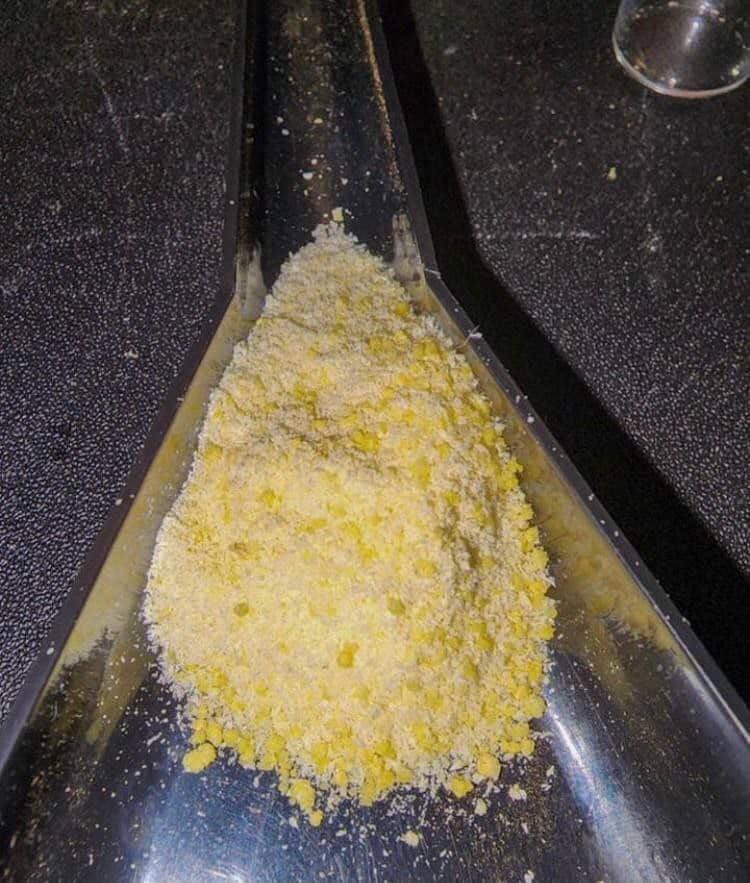
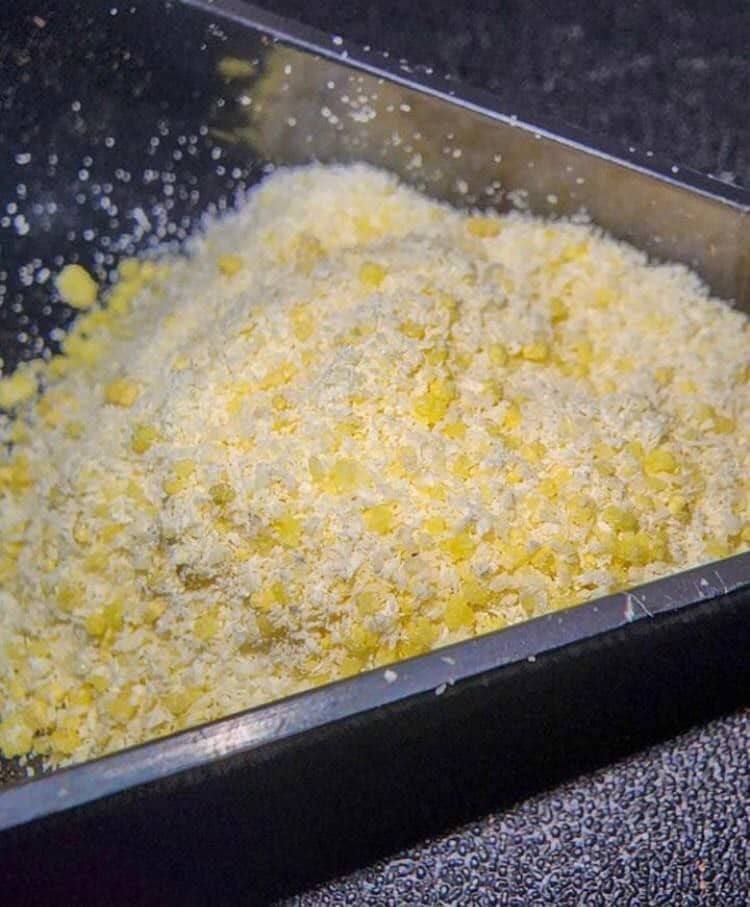
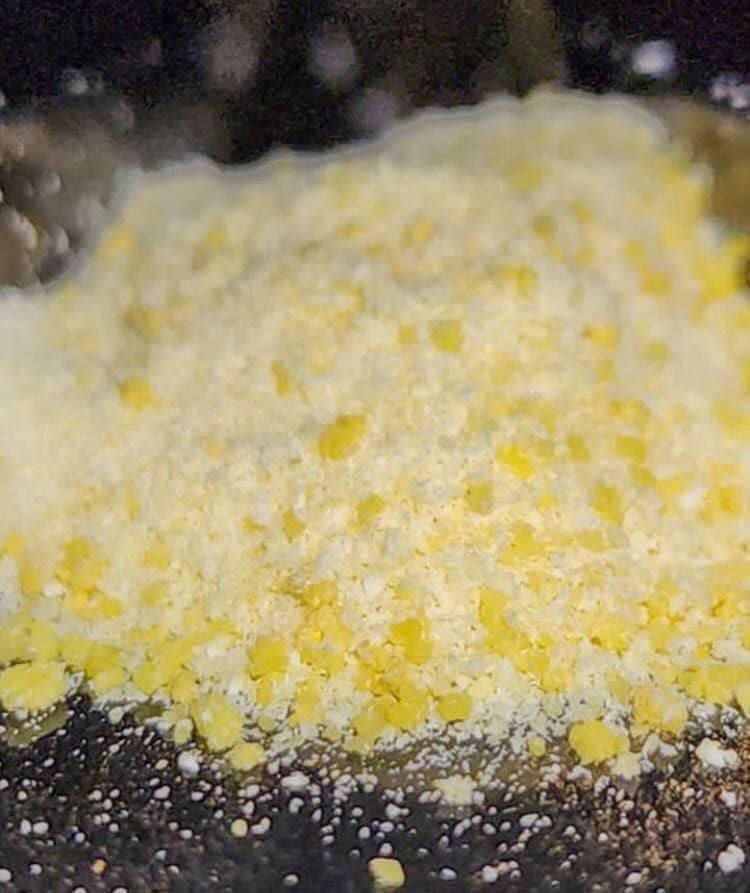



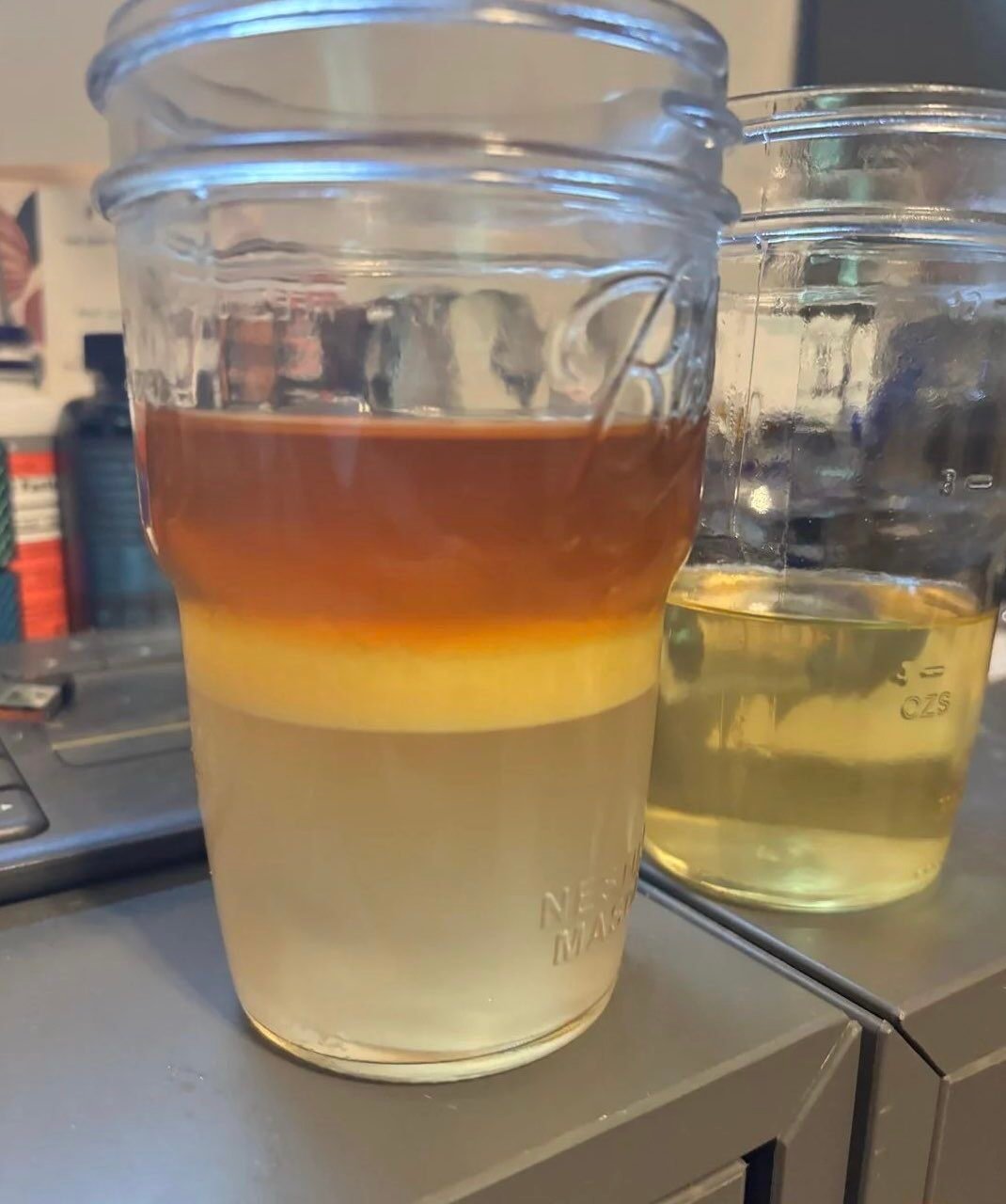
Preisklasse: €600 durch €9,000
5-MeO-DMT (5-methoxy-$N,N$-dimethyltryptamine), also known as $O$-methyl-bufotenin, is a naturally occurring and synthetically produced tryptamine alkaloid. Found in high concentrations within the parotoid gland secretions of the Colorado River toad (Incilius-Voliereehemals Bufo alvarius) as well as various plant genera (Virola, Anadenanthera), 5-MeO-DMT represents an important benchmark in neuropharmacological and forensic research due to its distinct receptor selectivity profile relative to classic psychedelic tryptamines.
Chemical & Physical Profile
Active Analyte: 5-methoxy-$N,N$-dimethyltryptamine (available as freebase or hydrochloride/fumarate salt).
Molecular Formula & Mass: $\text{C}_{13}\text{H}_{18}\text{N}_2\text{O}$ | 218.30 g/mol (freebase)
Chemical Architecture: Consists of an indole core bearing a methoxy group ($-\text{OCH}_3$) at the 5-position and an ethylamine side chain terminated with two methyl groups at the terminal amine.
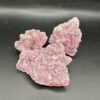
Physical Presentation: Off-white to pale tan crystalline powder (synthetic) or complex amorphous waxy solid (crude toad secretion matrix containing lipid fractions, cholesterol, and related indole metabolites).
Pharmacodynamics & Receptor Mechanisms
$5\text{-HT}_{1\text{A}}$ Receptor Agonism: Unlike classic psychedelics (such as DMT or psilocin) which exert their primary effects via $5\text{-HT}_{2\text{A}}$ activation, 5-MeO-DMT displays exceptionally high binding affinity ($K_i \approx 2\text{–}5\text{ nM}$) and high intrinsic efficacy as a full agonist at the serotonin $5\text{-HT}_{1\text{A}}$ receptor subtype.
Intracellular Signaling: Receptor activation stimulates pertussis toxin-sensitive inhibitory G-proteins ($G_i/G_o$), suppressing adenylyl cyclase activity, inhibiting cyclic AMP formation, and opening G-protein-coupled inwardly rectifying potassium channels ($\text{GIRK}$). This hyperpolarizes target projection neurons across the raphe nuclei, hippocampus, and cortical networks.
Secondary Targets: Exhibits lower affinity for $5\text{-HT}_{2\text{A}}$, $5\text{-HT}_{2\text{C}}$, Und $5\text{-HT}_7$ receptors, trace amine-associated receptor 1 ($\text{TAAR}_1$), and vesicular monoamine transporters.
Pharmacokinetics & Biotransformation
Monoamine Oxidase Clearance: Rapidly metabolized hepatically and systemically via oxidative deamination catalyzed by monoamine oxidase A ($\text{MAO-A}$) to form 5-methoxyindole-3-acetic acid (5-MIAA), leading to a very short biological half-life (approximately 12 to 20 minutes in mammalian models).
CYP2D6 Demethylation: Undergoes secondary biotransformation via cytochrome P450 2D6 ($O$-demethylation) to produce active bufotenin (5-hydroxy-$N,N$-dimethyltryptamine), an active metabolite with high $5\text{-HT}_{2\text{A}}$ affinity.
Analytical Profiling & Forensic Screening
Presumptive Colorimetric Spot-Tests:
Ehrlich’s Reagent: Rapid development of an intense purple/violet reaction, confirming the presence of an unsubstituted indole nitrogen.
Marquis Reagent: Typically yields an unreactive or sluggish pale yellow-to-olive transition.
Mecke Reagent: Shifts slowly from clear to a dull greenish-brown.
Instrumental Identification:
GC-MS: Demonstrates a diagnostic base peak at $m/z$ 58 ($[\text{CH}_2=\text{N}(\text{CH}_3)_2]^+$), a molecular ion $[M]^+$ at $m/z$ 218, and secondary diagnostic fragments at $m/z$ 174 and $m/z$ 159.
LC-MS/MS: Validates precursor-to-product ion transitions ($m/z$ $219 \rightarrow 174$, $219 \rightarrow 58$) for trace quantification in biological fluids and seized materials.
Toxicological Profile & Critical Safety Hazards
Autonomic & Respiratory Toxicity: Inadvertent in vivo systemic exposure produces potent sympathomimetic and autonomic disruption, including acute arterial hypertension, profound tachycardia, transient respiratory depression or apnea, and core hyperthermia.
Aspiration Risk: Rapid induction of motor ataxia, tremors, unconsciousness, and emesis creates a severe risk of fatal pulmonary aspiration in unmonitored environments.
Lethal Interaction with MAOIs: Concomitant exposure with Monoamine Oxidase Inhibitors (MAOIs, such as harmine, harmaline, or moclobemide) arrests the metabolic breakdown of 5-MeO-DMT, routinely precipitating fatal serotonin toxicity (malignant hyperpyrexia, autonomic collapse, metabolic acidosis, and seizures).
Regulatory Classification & Handling Controls
Controlled Substance Classification: 5-MeO-DMT is classified as a Schedule I controlled substance under the United States Controlled Substances Act, a Class A controlled drug in the United Kingdom, and is strictly regulated under international psychotropic control statutes.
Compliance Requirements: Possession, acquisition, analysis, and disposal mandate active DEA Schedule I analytical researcher registration, secure double-lock vault storage, and continuous chain-of-custody documentation.
| Grams | 10, 20, 40, 50, 70, 80, 90, 100, 200, 400, 500, 1000 |
|---|


 English English
  German
 Italian
 Dutch
Dutch
 Spanish


Rezensionen
Es gibt noch keine Rezensionen.