- Tu carrito está vacío
- Continuar comprando



Rango de precios: €300 por €3,500
Rlam 1 mg delivers immediate-release alprazolam, an intermediate-onset, high-potency triazolo-substituted benzodiazepine derivative. Commonly prescribed for rapid-onset symptom control in acute panic attacks and severe anxiety episodes, this 1 mg strength provides an intermediate therapeutic titration tier between initial starting regimens (0.25 mg to 0.5 mg) and higher maintenance doses required for refractory panic pathology.
Clinical Profile & Physical Presentation
Active Pharmaceutical Ingredient: Alprazolam (1 mg por comprimido).
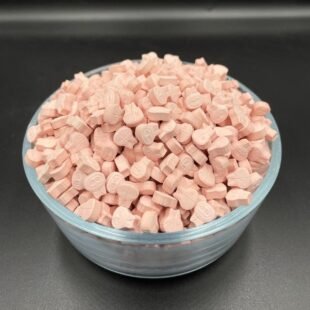
Dosage Form & Appearance: Compressed, immediate-release oral tablets, typically formulated as round, light-blue or white tablets with a central score line on one face to enable half-dose (0.5 mg) titration, and debossed with product identifiers (such as “RLAM 1”).
Manufacturing Excipients: Compressed with standard pharmaceutical excipients including microcrystalline cellulose, lactose monohydrate, magnesium stearate, colloidal anhydrous silica, and approved colorants (such as FD&C Blue No. 2 lake).
Pharmacodynamics & Mechanism of Action
Allosteric GABA Modulation: Selectively binds to a specific regulatory pocket at the interface between the $\alpha$ ($\alpha_1, \alpha_2, \alpha_3, \text{or } \alpha_5$) and $\gamma_2$ subunits of the pentameric $\text{GABA}_\text{A}$ receptor-chloride channel complex.
Chloride Influx & Hyperpolarization: Binds without directly activating the receptor pore; instead, it increases the opening frequency of the chloride channel in response to endogenous gamma-aminobutyric acid ($\text{GABA}$). The resulting inward chloride flux hyperpolarizes post-synaptic neuronal membranes, dampening excitability across the amygdala, hippocampus, and the ascending reticular activating system.
Triazolo Ring Characteristics: The incorporation of a fused triazole ring onto the basic benzodiazepine framework confers both high binding affinity and relatively rapid metabolic clearance compared to classic long-acting 2-keto benzodiazepines (such as diazepam).
Pharmacokinetics & Biotransformation
Absorption & Bioavailability: Readily and completely absorbed from the gastrointestinal tract following oral administration, demonstrating an absolute bioavailability of 80% to 90%.
Peak Plasma Concentration ($T_{\max}$): Peak plasma concentrations ($C_{\max}$) are reached rapidly, typically within 1 to 2 hours post-ingestion.
Distribution & Protein Binding: Approximately 80% plasma protein-bound (primarily to serum albumin), with an apparent volume of distribution ($V_d$) averaging 0.8 to 1.3 L/kg.
Hepatic Clearance: Metabolized predominantly by hepatic cytochrome P450 3A4 (CYP3A4). Biotransformation yields two primary hydroxylated metabolites: $\alpha$-hydroxyalprazolam (exhibiting roughly half the bioactivity of the parent compound) and 4-hydroxyalprazolam, both present at very low circulating levels.
Elimination: Mean terminal elimination half-life ranges from 11 to 15 hours in healthy adults. Clearance proceeds largely through renal elimination of glucuronide conjugates.
Prescribing Guidelines & Administration Protocols
Administration: Administered orally with or without food. Tablets may be split along the functional score line if directed by a physician for individualized titration.
Duration of Therapy: Recommended for short-term acute intervention. Long-term continuous administration is generally discouraged due to the predictable emergence of pharmacological tolerance and physiological dependence.
Tapering Protocols: Therapy should never be discontinued abruptly. Discontinuation requires a gradual, structured dosage reduction (e.g., decrements of no more than 0.5 mg every three days) under strict medical supervision to prevent severe rebound anxiety and acute autonomic withdrawal reactions.
Important Safety Information & Boxed Warnings
Concomitant Use with Opioids: Concurrent administration of benzodiazepines with opioids significantly elevates the risk of profound sedation, life-threatening respiratory depression, coma, and mortality. Co-prescribing should be reserved strictly for cases where alternative treatment strategies are inadequate.
Abuse, Misuse, and Addiction: Alprazolam is a Schedule IV controlled substance carrying high potential for misuse, physical dependence, and diversion. Misuse frequently involves co-ingestion with other central nervous system depressants or alcohol, substantially multiplying fatal overdose risks.
Dependence and Withdrawal Syndromes: Chronic use leads to physiological neuroadaptation. Abrupt discontinuation can precipitate severe, life-threatening withdrawal complications, including generalized tonic-clonic seizures, status epilepticus, delirium tremens, hallucinations, and severe tremors.
Contraindications: Contraindicated in individuals with known hypersensitivity to benzodiazepines, acute narrow-angle glaucoma, severe respiratory insufficiency, sleep apnea syndrome, or severe hepatic impairment. Concomitant administration with potent CYP3A4 inhibitors (e.g., ketoconazole, itraconazole) is contraindicated.
| Box | 10, 20, 30, 40, 50, 100, 200, 300, 400 |
|---|
 English English
  German
 Italian
 Dutch
Dutch
 Spanish


Reseñas
Todavía no hay reseñas.