- Your cart is empty
- Continue Shopping


€270Current price is: €270. Original price was: €300.
Valium 10 mg (diazepam oral tablets) is a prescription-only, Schedule IV long-acting benzodiazepine indicated for the management of severe anxiety disorders, the relief of acute skeletal muscle spasms, adjunctive management of convulsive disorders, and the symptomatic mitigation of acute alcohol withdrawal. Acting as a prototypical positive allosteric modulator of central $\text{GABA}_\text{A}$ receptor complexes, it amplifies endogenous inhibitory neurotransmission to produce coordinated anxiolytic, sedative, muscle relaxant, and anticonvulsant effects under direct medical supervision. Dispensed strictly by valid medical prescription.
Valium 10 mg tablets deliver diazepam, a classic 2-keto-substituted 1,4-benzodiazepine derivative renowned for its rapid onset, high lipophilicity, and extended metabolic half-life. As one of the foundational therapeutic agents in clinical neuropharmacology, the 10 mg tablet serves as a higher-tier oral strength typically employed for acute agitation, severe muscle spasticity associated with upper motor neuron disorders, or the stabilization of autonomic hyperactivity during ethanol detoxification protocols.
Clinical Profile & Physical Presentation
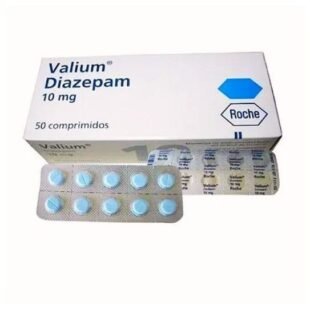
Active Pharmaceutical Ingredient: Diazepam (10 mg per tablet).
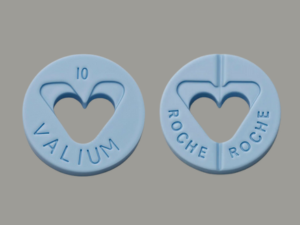
Physical Appearance: Typically manufactured as a round, light-blue tablet debossed with a distinctive functional score line or stylized manufacturer imprint (such as the distinctive hollow “V” cutout or “ROCHE 10” in branded formulations, or standard numerical debossing on generic versions).
Composition & Excipients: Compressed with pharmaceutical-grade binders and excipients, including anhydrous lactose, microcrystalline cellulose, pregelatinized corn starch, magnesium stearate, and approved colorants (such as FD&C Blue No. 1 or aluminum lakes).
Pharmacodynamics & Mechanism of Action
GABA Receptor Modulation: Binds stereospecifically to the classic benzodiazepine allosteric regulatory site located at the interface of the $\gamma_2$ subunit and either $\alpha_1$, $\alpha_2$, $\alpha_3$, or $\alpha_5$ subunits of the pentameric $\text{GABA}_\text{A}$ ligand-gated chloride channel.
Chloride Influx & Hyperpolarization: Allosteric binding potentiates the binding affinity of the primary inhibitory neurotransmitter, gamma-aminobutyric acid ($\text{GABA}$), significantly increasing the opening frequency of the intrinsic chloride ion pore. The resulting influx of extracellular chloride ions ($\text{Cl}^-$) hyperpolarizes the postsynaptic neuronal membrane, shifting resting potential further away from the excitation threshold.
Systemic CNS Effects: Attenuates neuronal firing across multiple functional subregions:
Anxiolysis: Driven predominantly via $\alpha_2$– and $\alpha_3$-containing $\text{GABA}_\text{A}$ receptors within the amygdala, hippocampus, and limbic circuits.
Sedation & Anticonvulsant Activity: Mediated primarily through cortical and subcortical $\alpha_1$ subunit complexes.
Myorelaxation: Facilitated by spinal cord motor neuron inhibition and brainstem descending pathway dampening via $\alpha_2$ and $\alpha_5$ receptors.
Pharmacokinetics & Active Metabolism
Absorption & Distribution: Highly lipophilic compound that is rapidly and almost completely absorbed from the gastrointestinal tract, reaching peak plasma concentrations ($C_{\max}$) within 30 to 90 minutes post-ingestion. Its high lipid solubility allows rapid penetration across the blood-brain barrier, followed by extensive redistribution into peripheral adipose reservoirs (which terminates early acute clinical effects).
Protein Binding: Highly bound to circulating human plasma proteins (approximately 98% to 99%, primarily human serum albumin).
Hepatic Biotransformation: Extensively metabolized via hepatic cytochrome P450 enzymes (predominantly CYP2C19 and CYP3A4) through sequential oxidative pathways:
Demethylation: Converted via CYP2C19 and CYP3A4 into $N$-desmethyldiazepam (nordiazepam), a major active metabolite with an extensive elimination half-life ($30\text{–}100\text{ hours}$).
Hydroxylation: Converted to minor active intermediate temazepam via CYP3A4.
Terminal Conversion: Both intermediate active metabolites are ultimately transformed into oxazepam, which undergoes rapid glucuronidation to inactive, water-soluble glucuronides.
Elimination Kinetics: Parent diazepam displays a biphasic elimination profile with a terminal plasma elimination half-life of 20 to 50 hours; cumulative accumulation of active nordiazepam during repeated administration extends total clinical systemic clearance substantially, particularly in elderly populations or patients with impaired hepatic clearance. Excretion is primarily renal ($~70\%$).
Clinical Indications & Prescribing Protocols
Primary Indications: Short-term management of acute anxiety disorders, treatment of acute agitation associated with delirium tremens or alcohol withdrawal, adjunctive relief of skeletal muscle spasms (reflex spasms from local pathology or central spasticity in cerebral palsy/paraplegia), and adjunctive management of generalized epilepsy.
Administration: Administered orally with water. The tablet may be bisected along the score line to deliver divided 5 mg doses when titrated by a physician.
Duration & Tapering: Indicated for short-term or intermittent therapy. Discontinuation after regular use requires a gradual, stepwise dose reduction under medical supervision to avoid acute autonomic rebound, insomnia, and life-threatening withdrawal complications.
Important Safety Information & Boxed Warnings
Risks from Concomitant Use with Opioids: Co-administration of benzodiazepines and opioids increases the risk of profound sedation, respiratory depression, coma, and death. Reserve concomitant prescribing strictly for patients with inadequate alternative treatment options.
Abuse, Misuse, and Addiction: Diazepam is a Schedule IV controlled substance carrying significant risks of misuse, physiological dependence, and diversion.
Dependence and Withdrawal: Prolonged therapy leads to neuroadaptation. Abrupt cessation or rapid dosage reductions can precipitate severe, potentially fatal withdrawal reactions, including status epilepticus, delirium tremens, psychosis, severe tremors, and autonomic instability.
Contraindications: Contraindicated in patients with severe respiratory insufficiency, acute narrow-angle glaucoma, severe hepatic failure, sleep apnea syndrome, or myasthenia gravis (due to muscle relaxant exacerbation).
 English English
  German
 Italian
 Dutch
Dutch
 Spanish



Reviews
There are no reviews yet.